How to poach an egg
by Great British Chefs8 December 2014
This article was updated on 14 March 2025

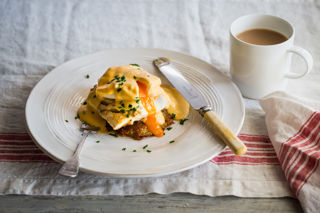
For many if not most recipes, truth be told, you don’t need the very freshest eggs. Eggs last a surprisingly long time, and will still make fluffy sponges, beautiful scrambles and a gorgeous garnish for weeks when in the fridge. It’s one reason they’re so useful to have around! However, there are exceptions to every rule and poached eggs are one of them. The fresher the egg, the easier it is to poach. Or, to be exact, the easier it is to produce a pretty, stringy-white free poached egg.
While eggs look like they have just two parts – the white and the yolk – they actually have many more. One essential but invisible part of a hen’s egg is the thin membrane around the egg white. Although people often check an egg’s yolk to tell its quality (looking for big, bright, yolks), the much overlooked egg whites are the most reliable way to tell how fresh an egg is. In fact, measuring an egg white’s height is an official part of egg classification in the USA.
So, how does this relate to poaching eggs? Well, the older your egg is, the more that invisible membrane breaks down, and the more annoying, swirling clouds of egg white you get when you try to poach an egg. The vast majority of tricks and hacks used when poaching eggs – vortexes, straining, cooking in spoons, vinegar – can be skipped if you use super fresh eggs. Of course, that’s not always possible, leading to…
As with all things eggs, J. Kenji Lopez-Alt has done plenty of tests. Kenji is a big proponent of Harold McGee’s trick of straining eggs before poaching them. This will get rid of any watery egg white, while retaining the more viscous egg white around the yolk. This trick is great for avoiding the ugly, wispy egg white that can plague even seasoned poached egg professionals. This egg white is perfectly good, and can be saved for cocktails, mixing into porridge or whatever else you like.
However, there are a few downsides to this trick. Namely, it means dirtying a strainer and slightly complicating an otherwise very simple recipe. You are also, of course, losing some of the egg white. If you’re straining very old eggs, you might find yourself losing half the egg in the strainer. As a result, this trick is best used on eggs that are just a bit past their best. If you use it to try and revive very old eggs, you’re going to end up with a poached yolk rather than a poached egg.
If you’ve read a recipe for poached eggs before, you might have seen the curious instruction to add a few tablespoons of vinegar to the water. This allegedly helps firm up the egg whites, preventing pesky stringy bits. You might also have seen staunch opponents of the vinegar method – like Alice Medrich, who says she avoids ordering poached eggs just in case they have been cooked with vinegar. For us, the truth lies somewhere in the middle.
A small amount of vinegar added to poaching water, generally doesn’t make the eggs smell vinegary – but it also doesn’t make much of a difference, if any, to the final result. A lot of vinegar added to eggs will make the whites firmer, but to such an extent that they can be almost unpleasantly rubbery, and make the kitchen (if not the egg!) smell strongly of vinegar.
We’d say there’s no harm in a splash of vinegar if you like adding it, but you’ll probably find it can be omitted and no one will be any the wiser.
This step above all is what often puts people off making poached eggs – and this can be easily debunked. You don’t need to swirl the water at all. In the words of Alice Medrich ‘The firmer portion of the egg whites stay with the yolks whether or not you swirl, and the runny ones will still float around.’ As with the vinegar, giving the water a little swirl before you add in an egg won’t do any harm. But you can actually make great poached eggs with water as still as a mill pond.
This way of making poached eggs is designed for one or two eggs. If you’re making more, you’ll find that adding lots of eggs to the water will bring the temperature down so it’s too cool to cook them through, and they might stick together.
Bring a small port of water to a rolling boil, then turn off the heat
Crack the eggs into a small bowl or ramekin, then slip them into the water on opposite sides of the pan
Cover the pan and set a timer for 4 minutes
Once the time is up, remove each egg from the pan with a slotted spoon, one at a time, patting the bottom of the spoon with kitchen towel to remove any excess water
Use your eggs to top rice, toast or anything you like!
It is possible to cook poached eggs in advance, storing them in a bowl of fresh cold water in the fridge for a few hours. Rewarm the eggs in hot water before serving.
Please sign in or register to send a comment to Great British Chefs.